Average speed
22.5 mph became 17.4 mph
The installation worked
After neighbors built it, 16th & Monon became kinder, slower, and easier to trust. More people cross. Drivers yield. The dangerous moments nearly vanished, and the data carries the feeling.
The crossing changed
Before the installation, standing at 16th and Monon meant reading fast traffic. The quickest drivers set the tone: the top 15% were moving at least 29mph, and about one in three vehicles was over 25mph.
After the neighbors built it, that changed. The fastest drivers slowed, with the 85th percentile dropping from 29mph to 22mph. Very high speeds over 30mph fell by 86%, and vehicles over 25mph shrank to about one in sixteen.
drivers over 30mph
Each dot is a crossing moment. The after picture is not perfect, but it is unmistakably more generous.
And everyone slowed down
Before, about 1 in 3 vehicles passed through above 25 mph, the speed at which collision injuries become far more likely. After, that became about 1 in 16.
The most dangerous speeds dropped even harder. Vehicles above 30 mph fell by 86%.
Both directions. Morning and evening. Weekday and weekend. The numbers moved the same way everywhere we looked.
22.5 mph became 17.4 mph
29 mph became 22 mph, so even speeders slowed
30.5% became 6.1%, turning 1 in 3 into 1 in 16
The highest-risk speeds became uncommon
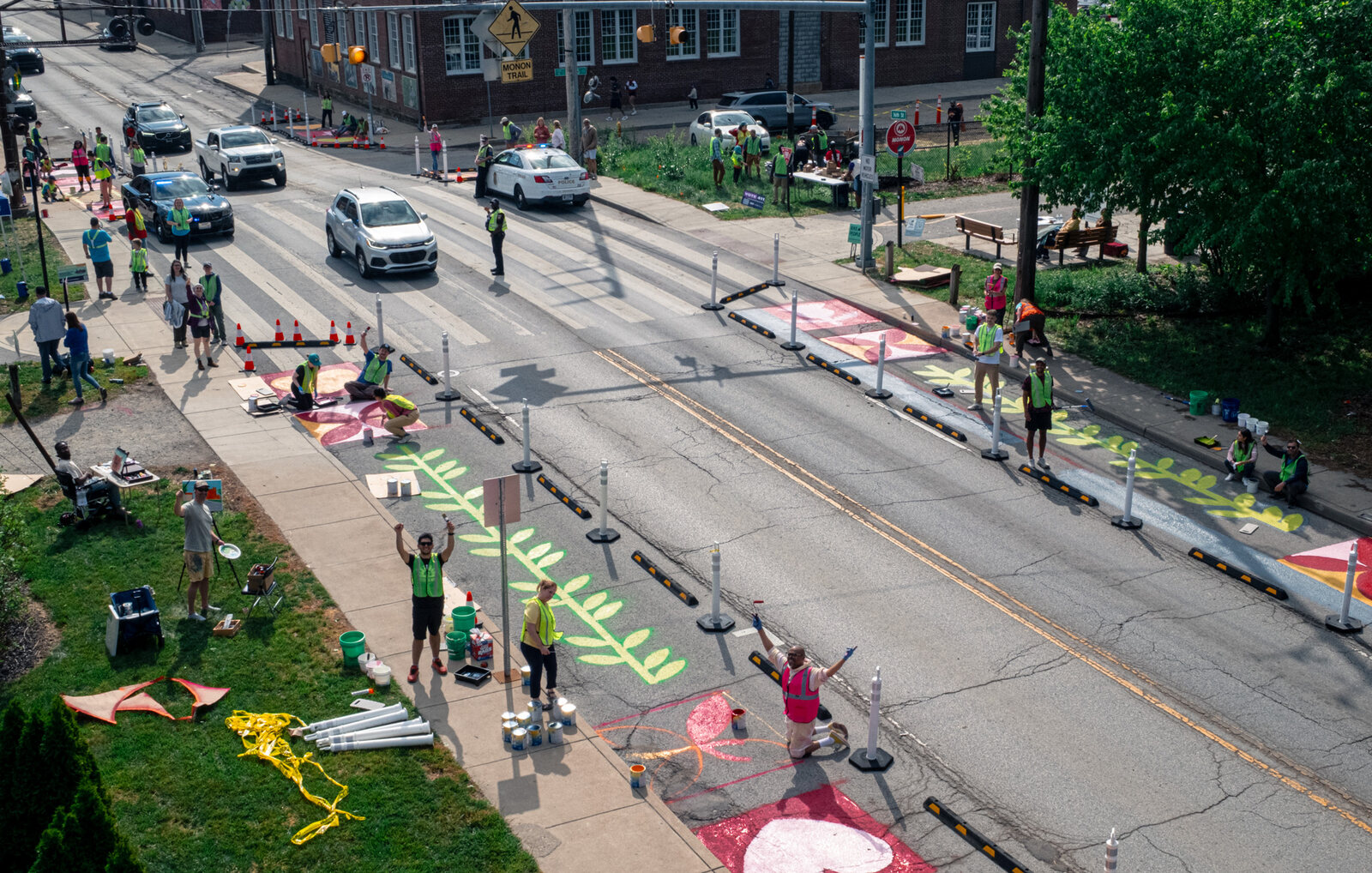
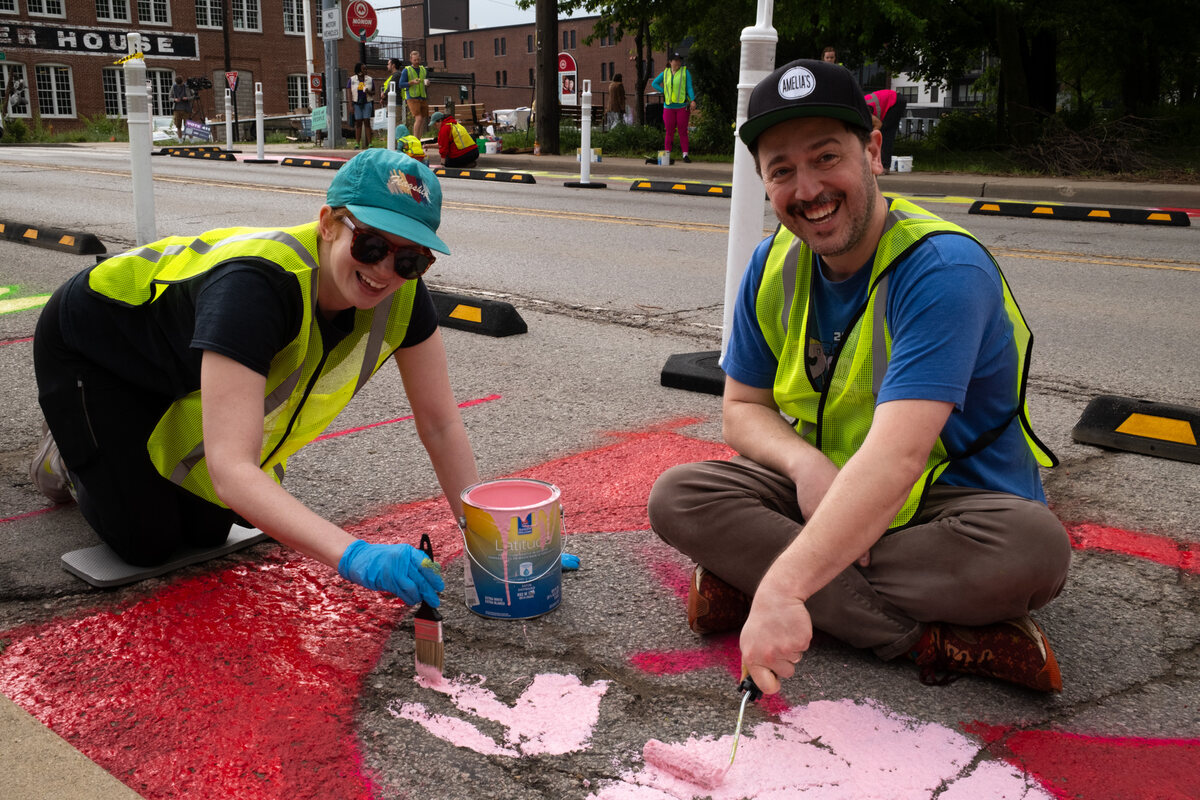
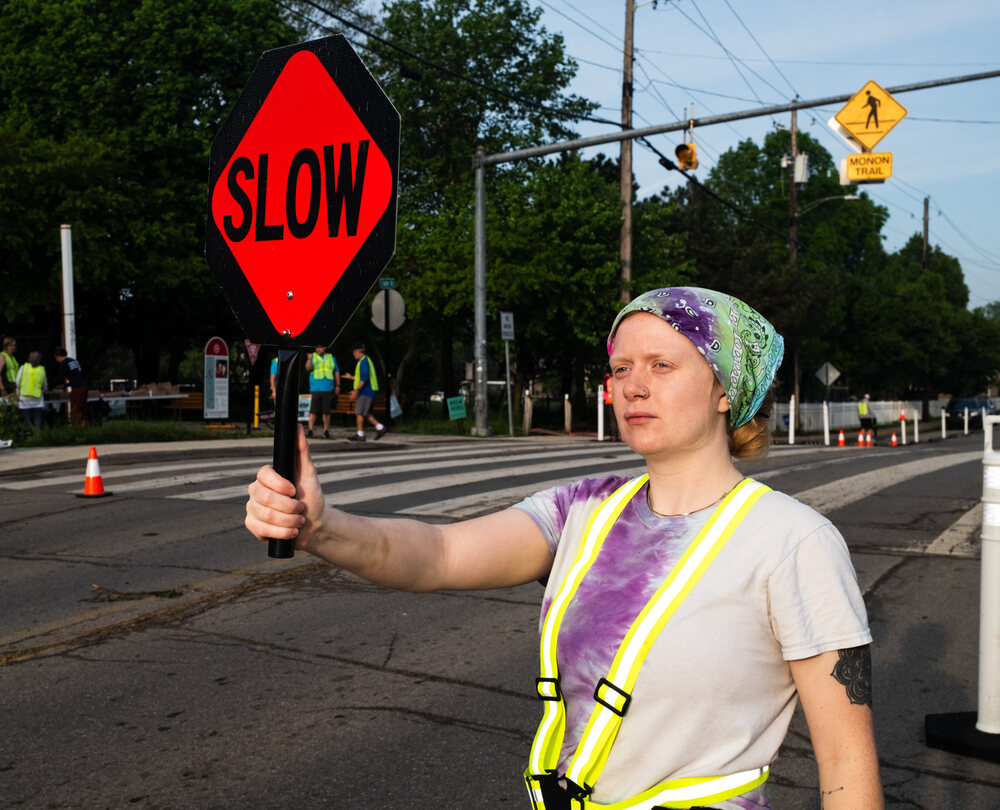
What neighbors built
The installation turned blank asphalt into a visible invitation to slow down, look up, and treat the crossing as a place with people in it. It is tactical urbanism with a human pulse: practical, bright, handmade, and impossible to miss.
The proof
Neighbors counted by hand across 30 observation sessions, before and after the build. Both travel directions. AM and PM. Weekday and weekend. These are early before/after observations, not a controlled trial, but the shift is large, consistent, and points the same direction across every view of the crossing.
The survey has concluded
The traffic study and community survey tell the same story: this project made the crossing safer. The full report is now published, along with what we have asked the City to do next and the data behind it.
Read the reportIncludes the speed study, survey results, and the raw data.
Thank you
We took initiative. Residents organized, designed, painted, counted, and built it together. The numbers above are the proof, but the real result is a crossing where a parent, a kid, or a neighbor on the trail can step off the curb and trust that they will be seen.
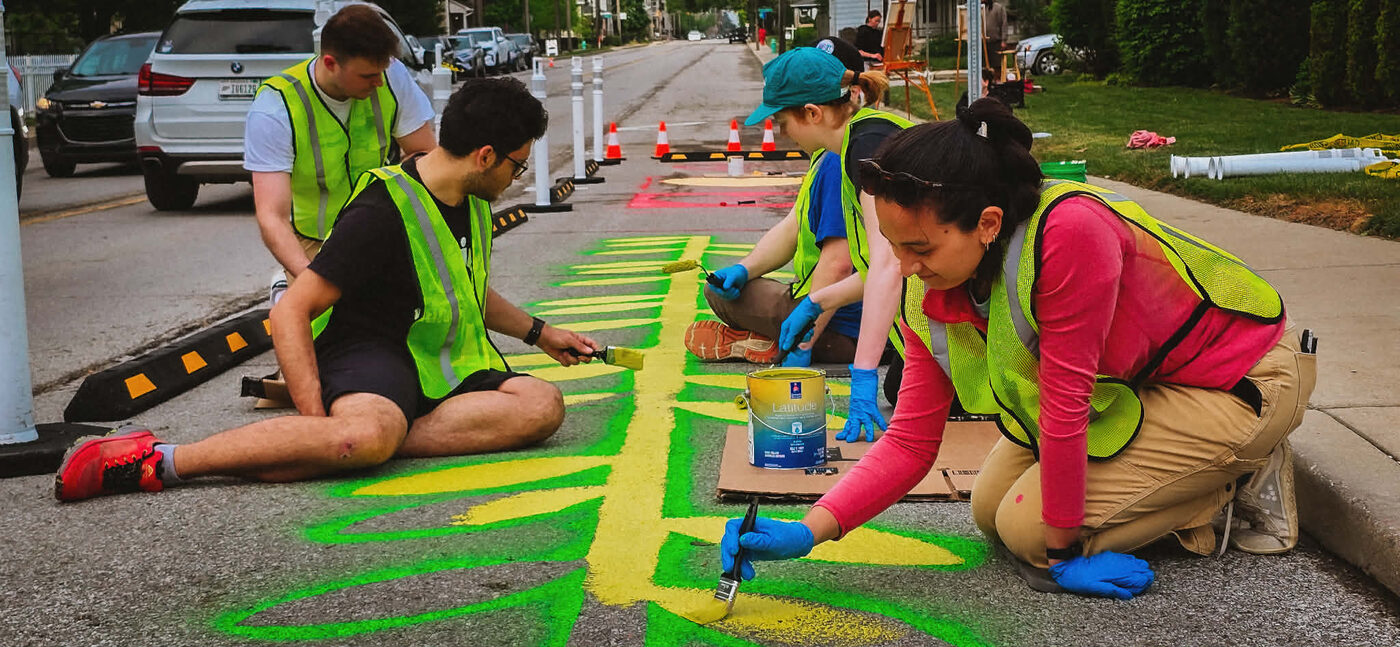
Thank you, neighbors of Martindale-Brightwood, Old Northside, Kennedy-King, the Near East Side, and every rider and walker on the Monon.
You did this.
Now let's make it permanent.
Stay informed
Sign up for occasional notes about 16th & Monon: when the report is ready, when it goes to the City, and the next steps toward a permanent safer crossing.
No noise. Just the updates worth walking over for.